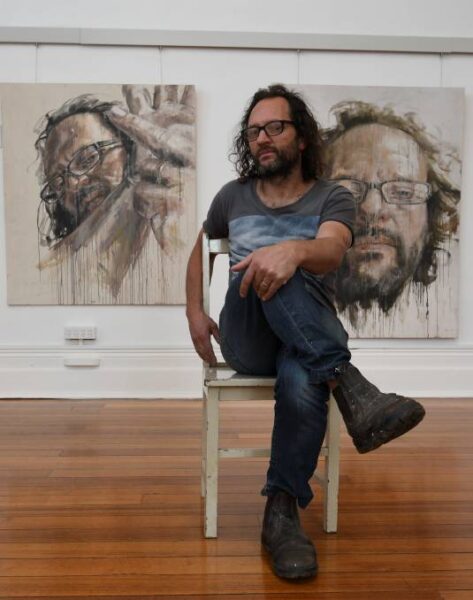
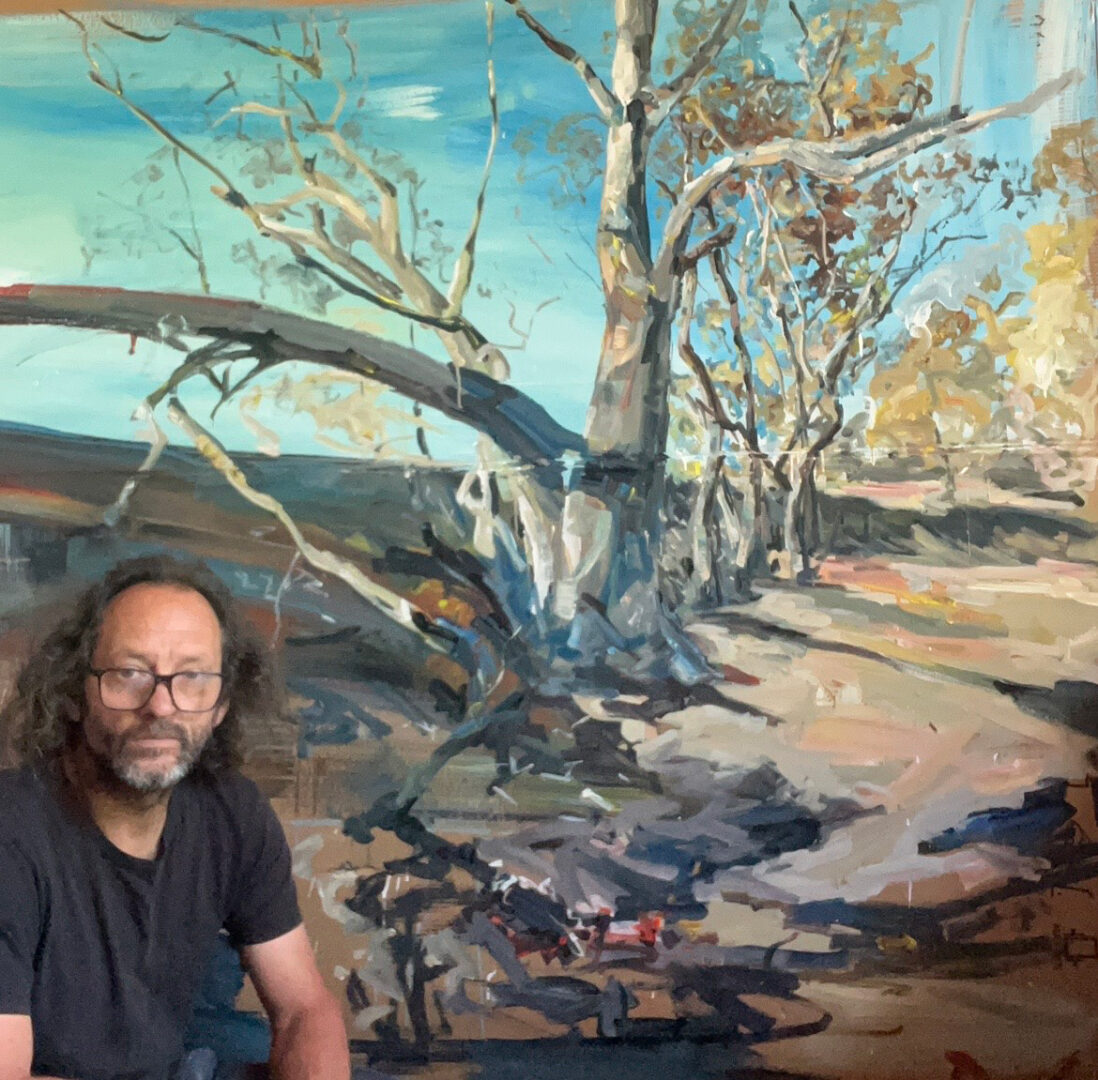
Daniel Butterworth (Australia) is not afraid to face the truth, no matter how raw or uncomfortable it may be. With a career marked by the most prestigious awards in his country —being a regular on the shortlists for the Archibald, the Doug Moran, and the Kilgour— Daniel has built a visual language where honesty prevails over ornament.
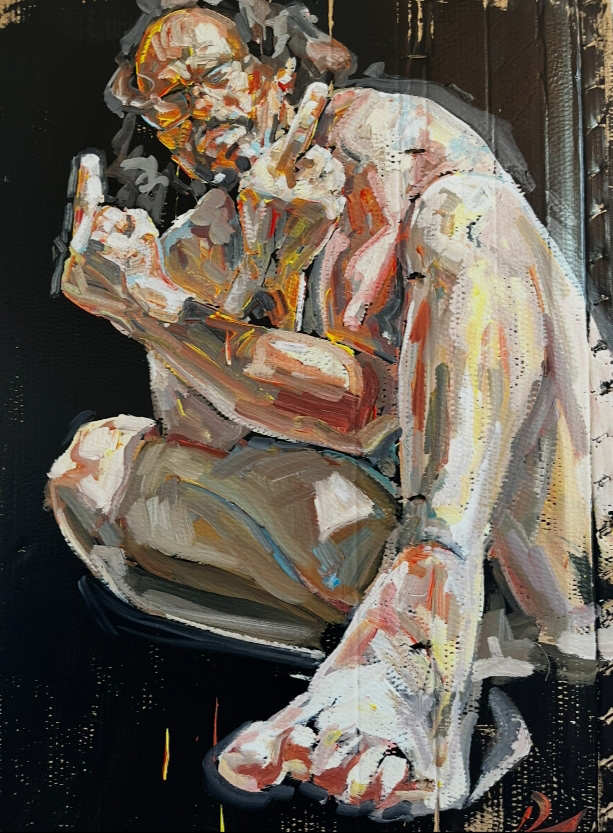
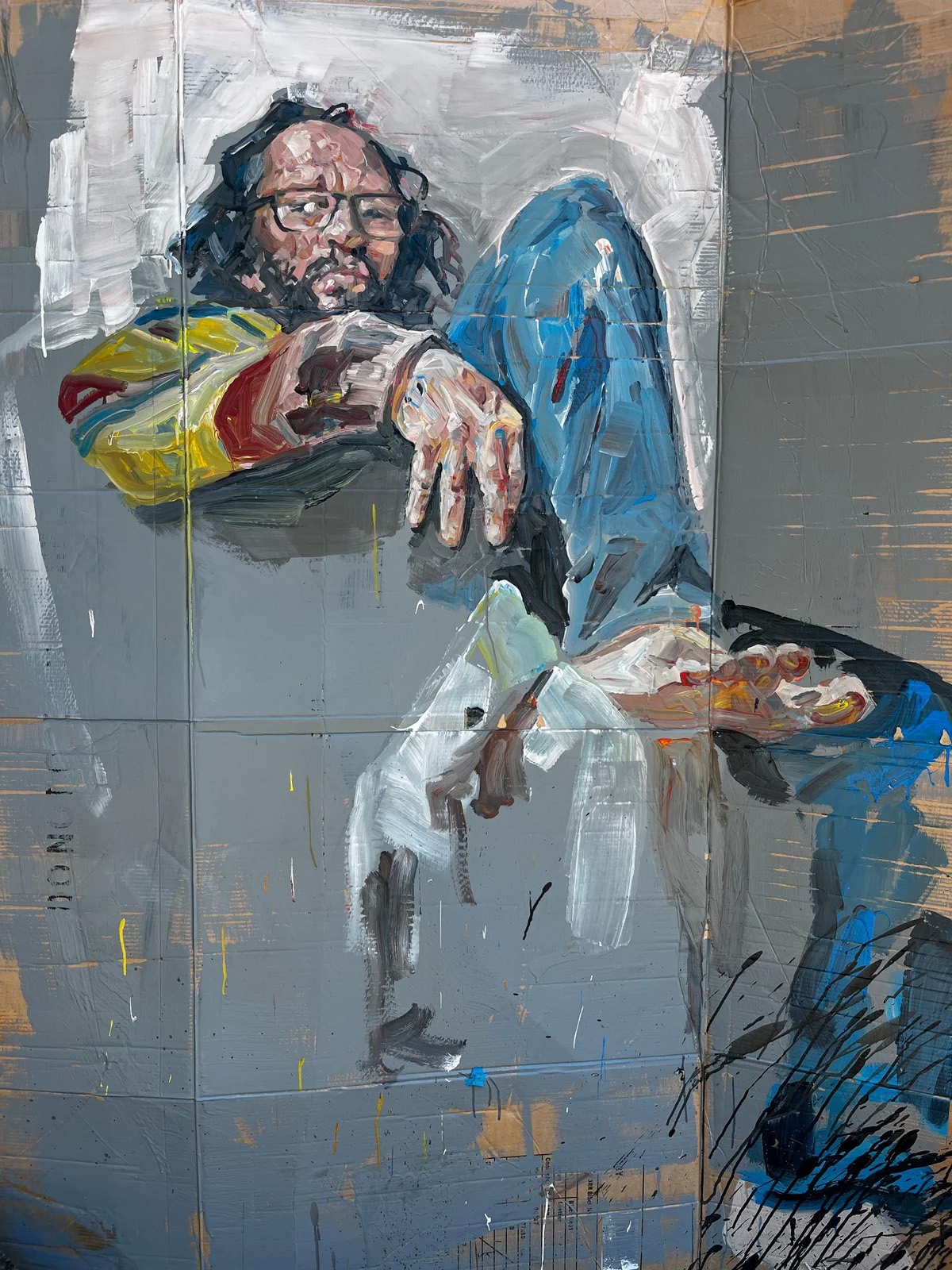
His works, often created on supports as humble and direct as cardboard, are a slap of expressionist realism. Through his portraits and, most notably, his visceral self-portraits, Butterworth explores the human condition with gestural brushstrokes, deliberate drips, and a scale that confronts the viewer. In his studio in Kyneton, Victoria, art is not about seeking aesthetic perfection, but about capturing the essence of survival, identity, and the passage of time.
Daniel, your CV is an impressive list of finals in Australia’s most important awards, yet your work maintains an “anti-institutional,” almost rebellious aesthetic. How do you manage to preserve that raw authenticity and purity of stroke when your work is so celebrated by the art elite?
Staying honest to myself. An artist should always be moving; if you stop challenging yourself you become stagnant. Art is conducted for many different reasons including money; those who create for money will fall here. I create for me; if I somehow knew that I was never going to sell another piece of art, it would not stop me from painting. Painting is me.
Recycled cardboard is one of your signatures supports. It is a material many would consider trash, but in your hands, it becomes a surface eager to welcome light and color. What does cardboard, with its texture and fragility, offer you that a traditional linen canvas does not?
Well, canvas wasn’t invented for artists. Before canvas, artists painted on board; this was hard to transport at the time. This problem was sorted by artists who used old discarded torn sails from ships to paint on so they could roll them up and transport them a lot easier. So, in my mind canvas, for artists, was a waste material, not unlike cardboard.
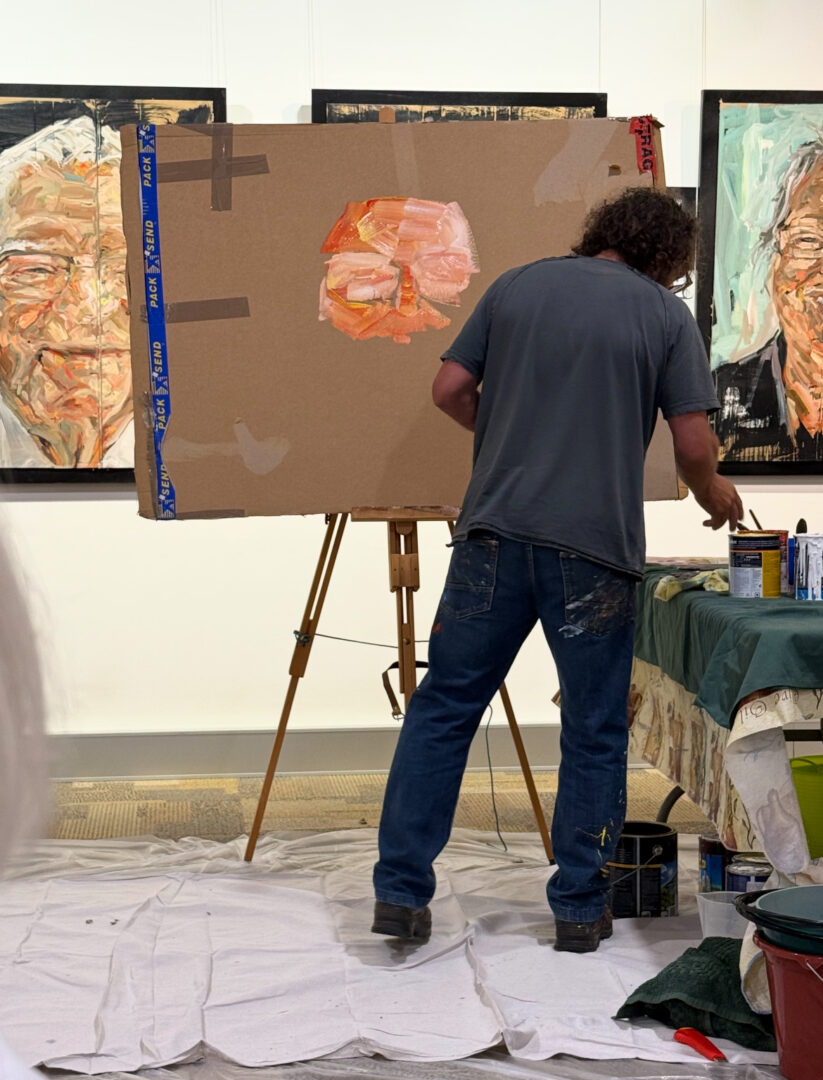
Cardboard is a beautiful surface. I use water-based house paint, and the way it glides and holds the strokes better than canvas is what I enjoy. Some of the greats painted on cardboard: Edvard Munch’s The Scream is on cardboard, Ian Fairweather painted on cardboard, and so many more.
Your self-portraits are incredibly honest, sometimes even vulnerable or grotesque in the most human sense of the word. Is painting yourself in this way an exercise in ego or, on the contrary, perhaps a personal exorcism?
My underlying thing with all my work is honesty. I try to portray the truth, and at times the truth will be more than the visual.
In many of your works, we see drips, stains, and a sense of absolute urgency. How much is planned choreography and how much is “controlled accident” when facing a large-scale face?
This question also refers back to honesty. All the marks that you see in my work are what happened in that moment. I will not deliberately make a drip; I want the viewer to see the real me, not something that has been staged.
You have participated in programs like “Portrait Artist of the Year,” where time is the enemy and the pressure is public. Is it possible to find the “truth” of a subject when you have cameras recording every movement of your brush?
I no longer let white noise affect the way I paint. White noise are things that may compromise your creativity. I create without compromising, without restriction.
You live and work in Kyneton, Victoria. In what way do the Australian rural environment and that particular Southern Hemisphere light influence, the energy of your paintings?
I love where I live. Does it influence my work? Absolutely. If I lived elsewhere, I would be influenced by my surroundings, but I would still be me, and I am a large part of my work.
You have a background in education and have worked with students of all ages. What is the first thing you try to get a student to “unlearn” so they can start painting for real?
The first thing I say to art students is that art has no rules, no boundaries. I will let them know if they come up to me and ask me “Can I do this?”, the answer will always be “yes.” I do not care what the question is. The second thing is enjoying what you are doing. Create for you; if you are not connected it won’t work, the viewer will see right through it.
Your work is in collections halfway around the world. Do you believe figurative painting is the definitive universal language? Does a viewer in Madrid feel the same as one in Melbourne when looking at one of your portraits?
Yes, I feel the figure is a universal genre. Everyone can read someone’s face and body language. You know despair, you can see happiness, we can see pain, whether or not you speak their language.
At Target Prize, we value “excellence and truth.” If you had to choose just one work from your entire career to be remembered 500 years from now as your life testimony, which would it be and why?
Big question. Which one would I want to be remembered by? I feel my full-figure self-portraits are when I am most connected to the work. I feel these are the works where you get all of me and a bit more. At the present time this would be it, but I still have a lot of paintings left in me.
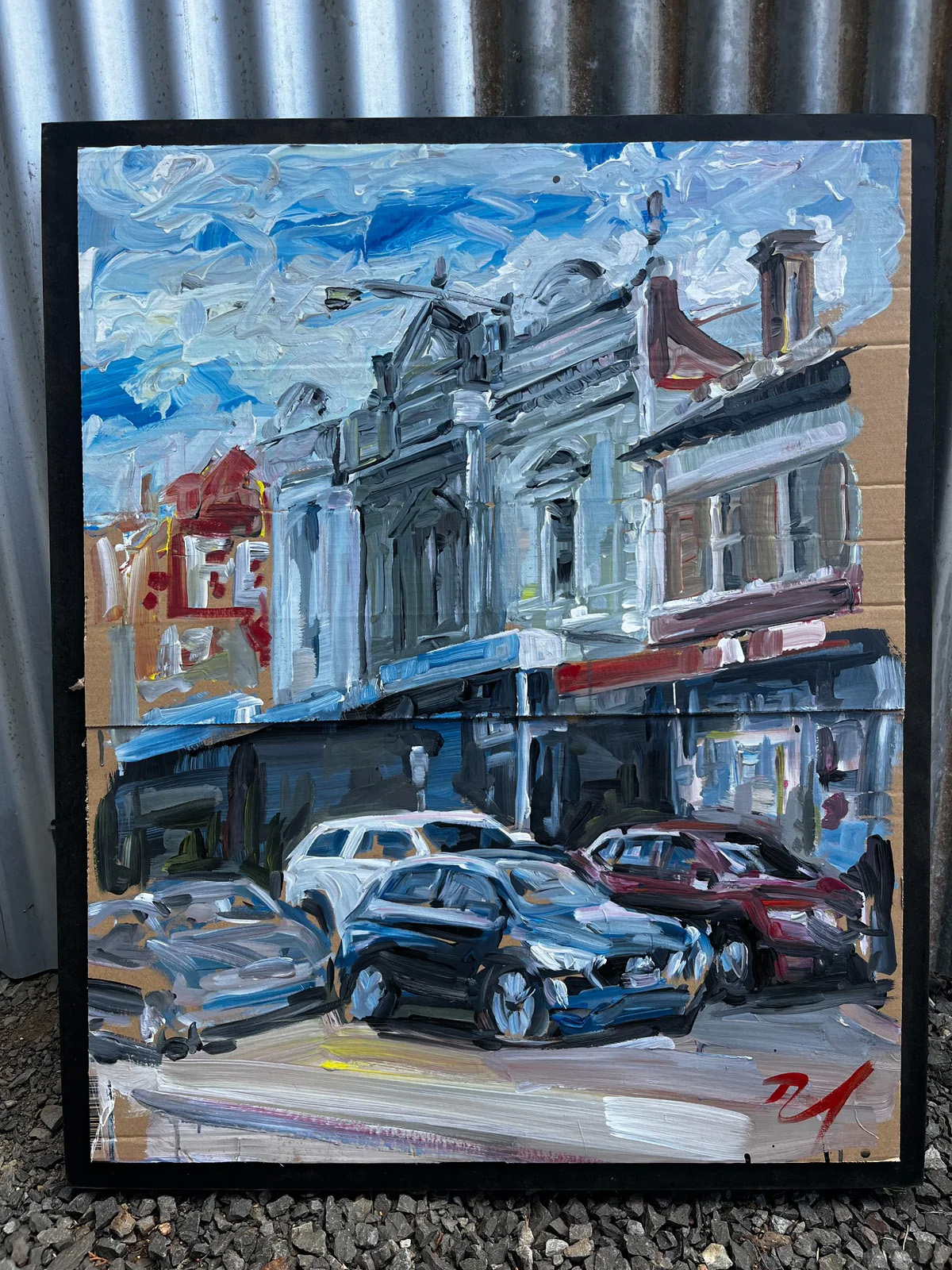
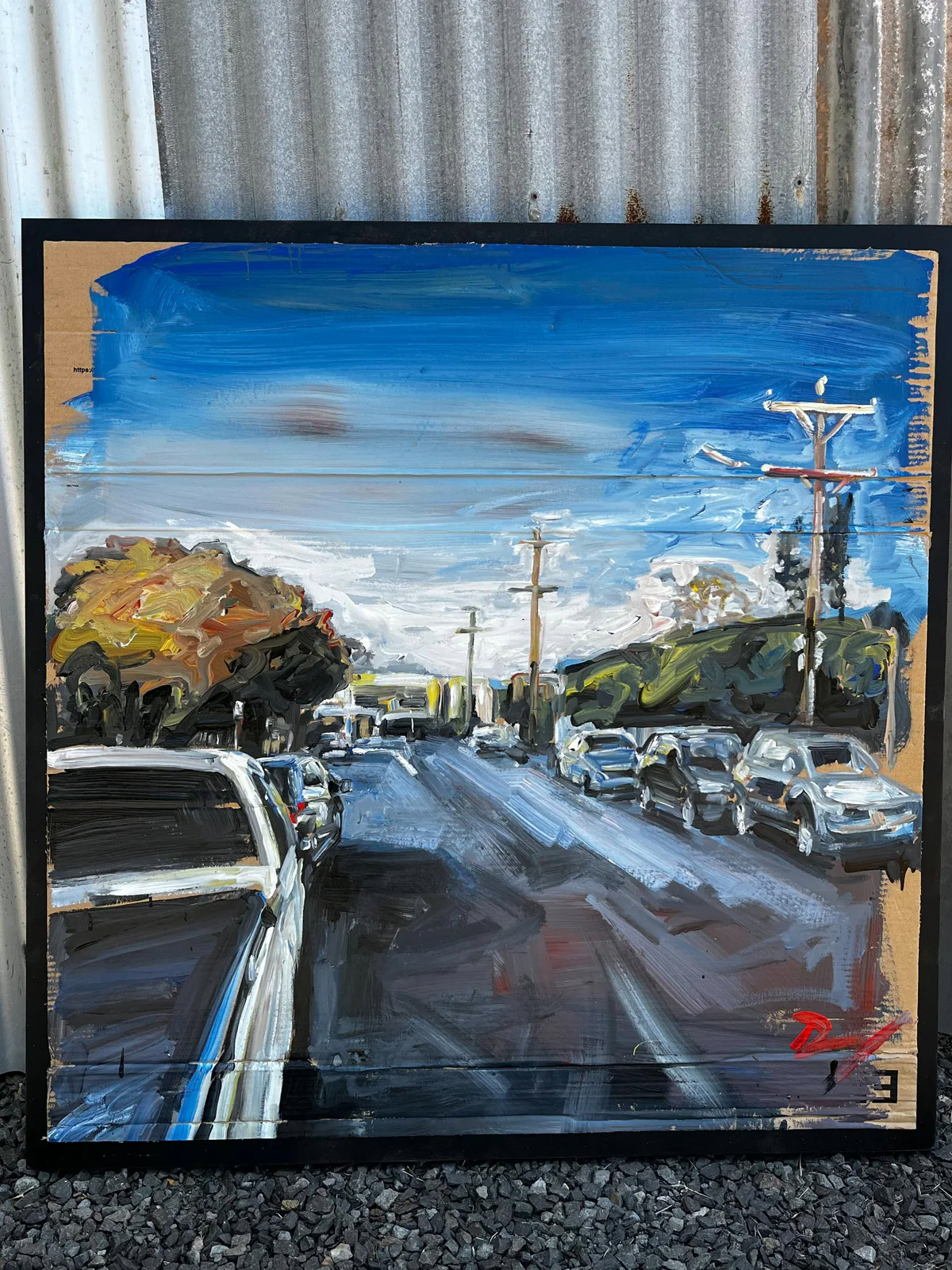
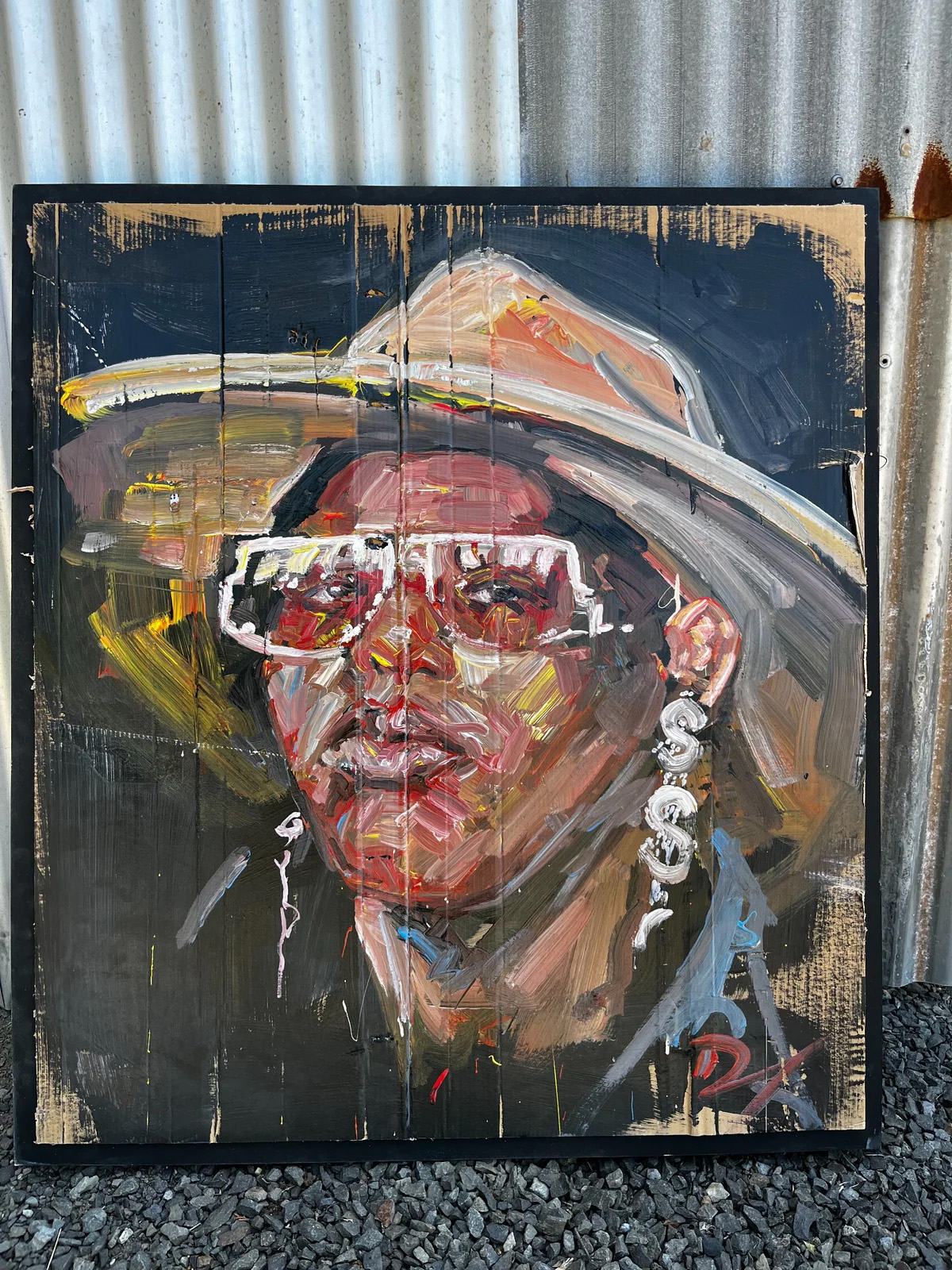
If your life were a painting on a giant cardboard box you just found on the street, what colors would you use for the background and what expression would the main face have?
My life as a painting? It would be full of color but also black and white. It would be me running, chasing something that I will never catch—and I do want to catch it.
Daniel, to conclude: for many artists, you are a benchmark of perseverance. What would you say to that painter who is in their studio right now, alone and doubting, thinking about whether to submit their work to the next edition of Target Prize?
Put yourself out there and believe in yourself.