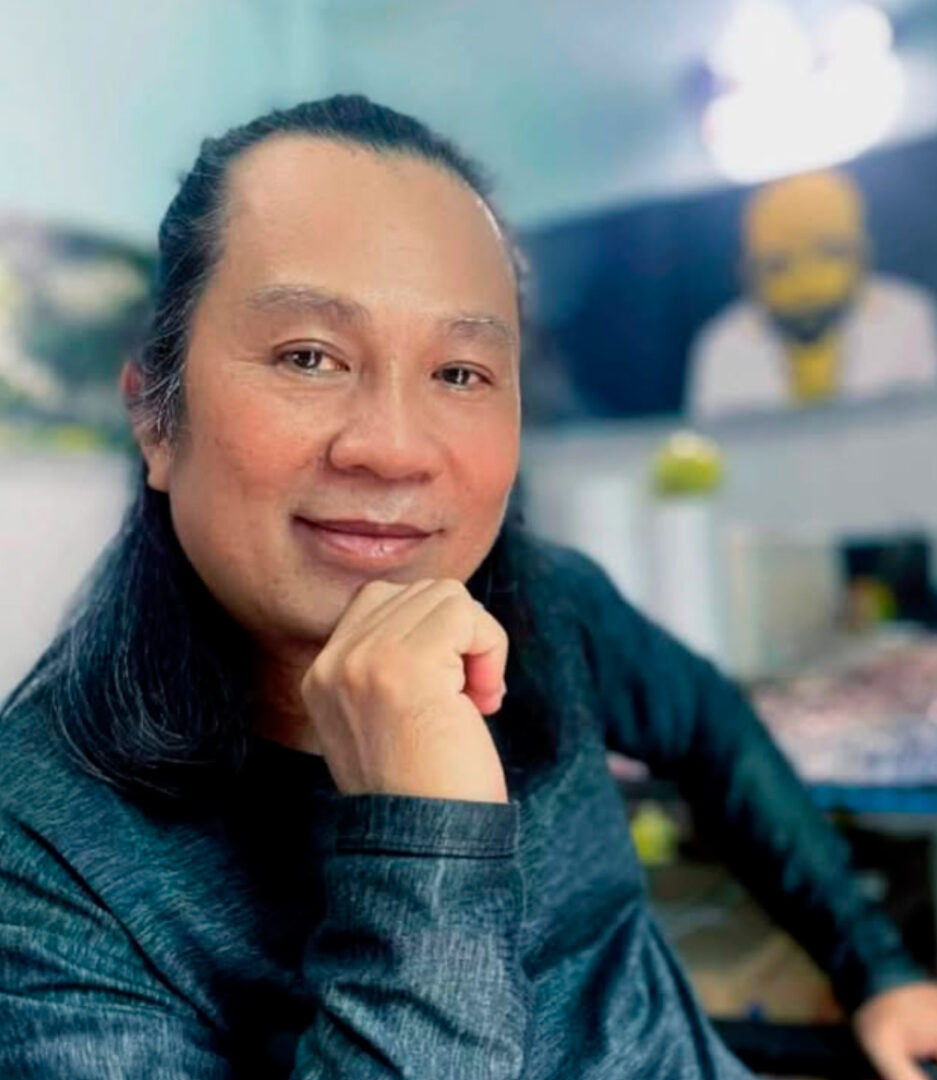
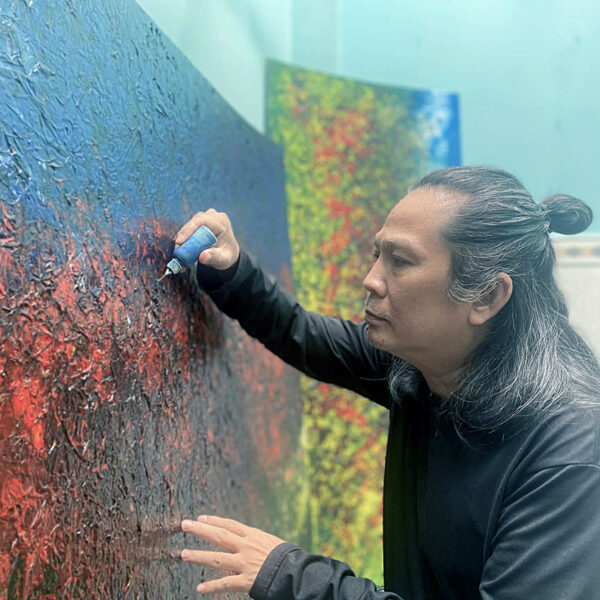
The work of Hoang Lam Tu Bao (Saigon, 1973) is a journey back to the essentials. Although his artistic path formally began in 2003, balancing the world of fashion with artistic design, it was in 2006 when the discovery of abstraction marked a definitive turning point in his career. From his studio in Vietnam, Tu Bao has built a visual language where the landscape transitions from a mere reference to a profound internal sensation.
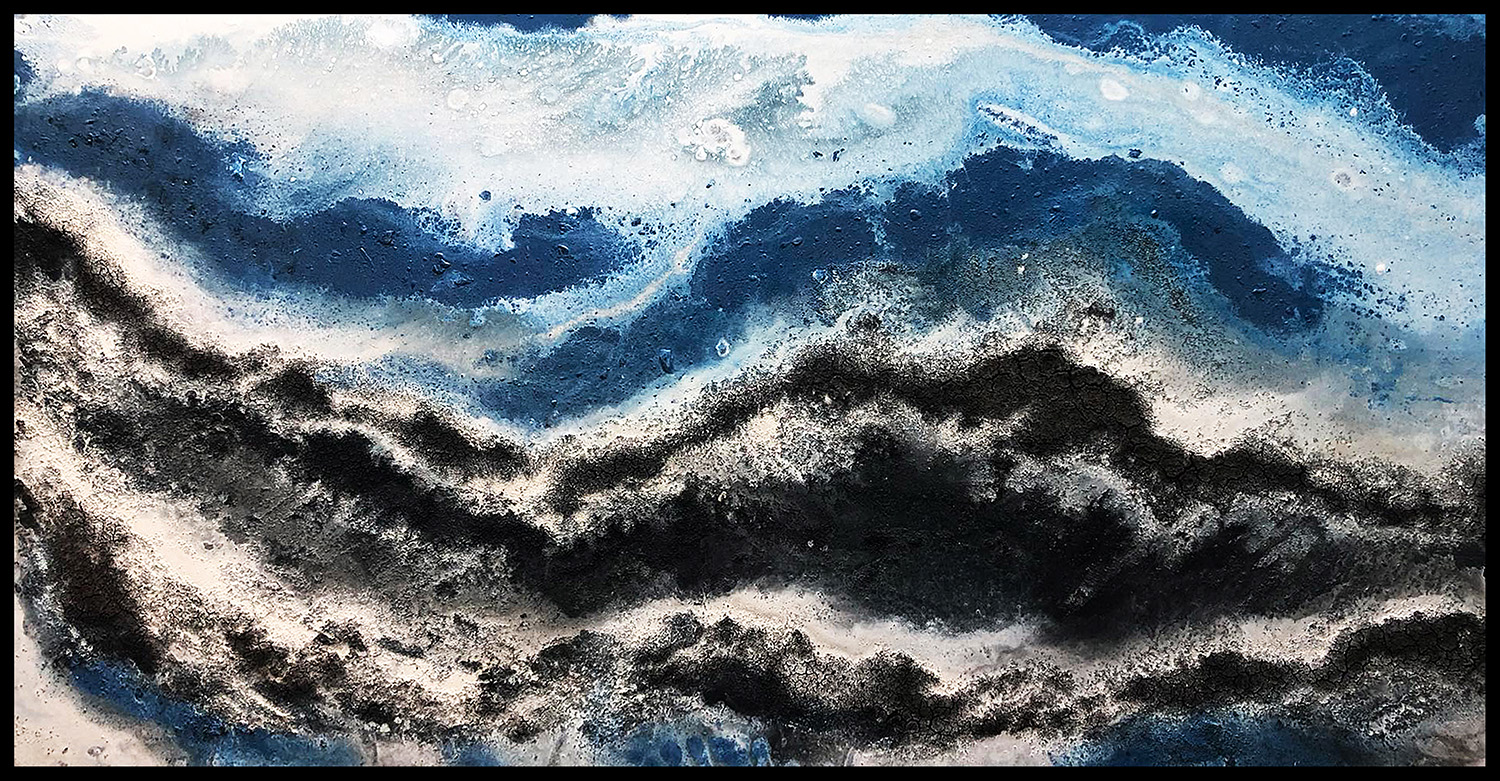
His technique, which prioritizes acrylic on paper combined with recycled and diverse materials, is a statement of principles that transcends purely aesthetic goals. Through his gestural strokes and immersive atmospheres, this artist reminds us that we are part of a fragile and beautiful whole. In his painting, nature is perceived through the filter of memory.
Hoang, your path to art was not linear. You started in fashion design and commercial aesthetics before fully committing to abstraction in 2006. If fashion can be framed within the recognizable and the figurative, we could say the “plot twist” was twofold: both in the vehicle of expression and in the content.
For years, my world was the fashion industry—a space where projected image and commercial success dictated the path. However, in 2006, I felt a vital need to break through that surface. I chose abstraction as a tool to transcend the limits of the aesthetic and the external. For me, it is not just about painting; it is about conducting an honest search for the inner self and capturing a beauty that is not merely seen, but inhabited.
Using acrylic on paper is not very common; furthermore, you add materials with a specific purpose: environmental defense. How and based on what criteria do you proceed with the selection of these elements?
I opted for acrylic on paper due to the versatility and the organic vibration that color acquires on this support, which is often perceived as more fragile than canvas. Paper is a familiar yet deeply challenging material. By integrating recycled elements and environmentally friendly materials, my work ceases to be a simple visual object and becomes a manifesto. I firmly believe that art must go beyond visual impact and awaken a shared responsibility toward the world that sustains us.
In what way do you believe art can help “heal” our relationship with the environment?
Art has the unique power to remind us of our true essence. It helps us heal that fractured bond with the environment by awakening a spiritual connection and a profound respect for nature. When a work manages to move us, it doesn’t just motivate us to live in harmony; it transforms our perception, turning the protection of the environment into an emotional necessity rather than just a duty.
In fact, your style has been described as a “dialogue between man and nature.” In an increasingly digital world disconnected from the organic, is your painting a kind of form of resistance?
I don’t consider my painting a rebellion against technological progress, but rather a resistance against forgetting. In a present dominated by the digital and the ephemeral, my paintings act as an anchor. They are a tactile and visual reminder of the need to reconnect with the organic and the primal, preventing us from losing our roots amidst the noise of digital disconnection.
You often state that your creations are “slices of memory and emotion.” When you face the blank paper in your Saigon studio, do you usually trace a specific moment or event in your memories, or does it emerge spontaneously?
Facing the blank paper in the stillness of my studio triggers a fascinating process: I don’t just rescue fragments of memories and emotions from the past; I also allow the pulse of the present and the events unfolding around me to permeate my work. My paintings are not static; they are a living intersection where memory meets the “now,” allowing the work to breathe both who I was and what I am feeling at this very moment.
Few places in the world boast the landscape richness and the light of Vietnam. Saigon: chaotic and beautiful. How does the city influence you?
Saigon is a city of extreme contrasts: it is noisy, chaotic, and fast-paced, but at the same time, it possesses a lyrical beauty and unparalleled light. That constant dynamism is precisely what nourishes my inspiration; I have learned to find balance and serenity within that apparent disorder, translating that vibrant energy directly into my brushstrokes.
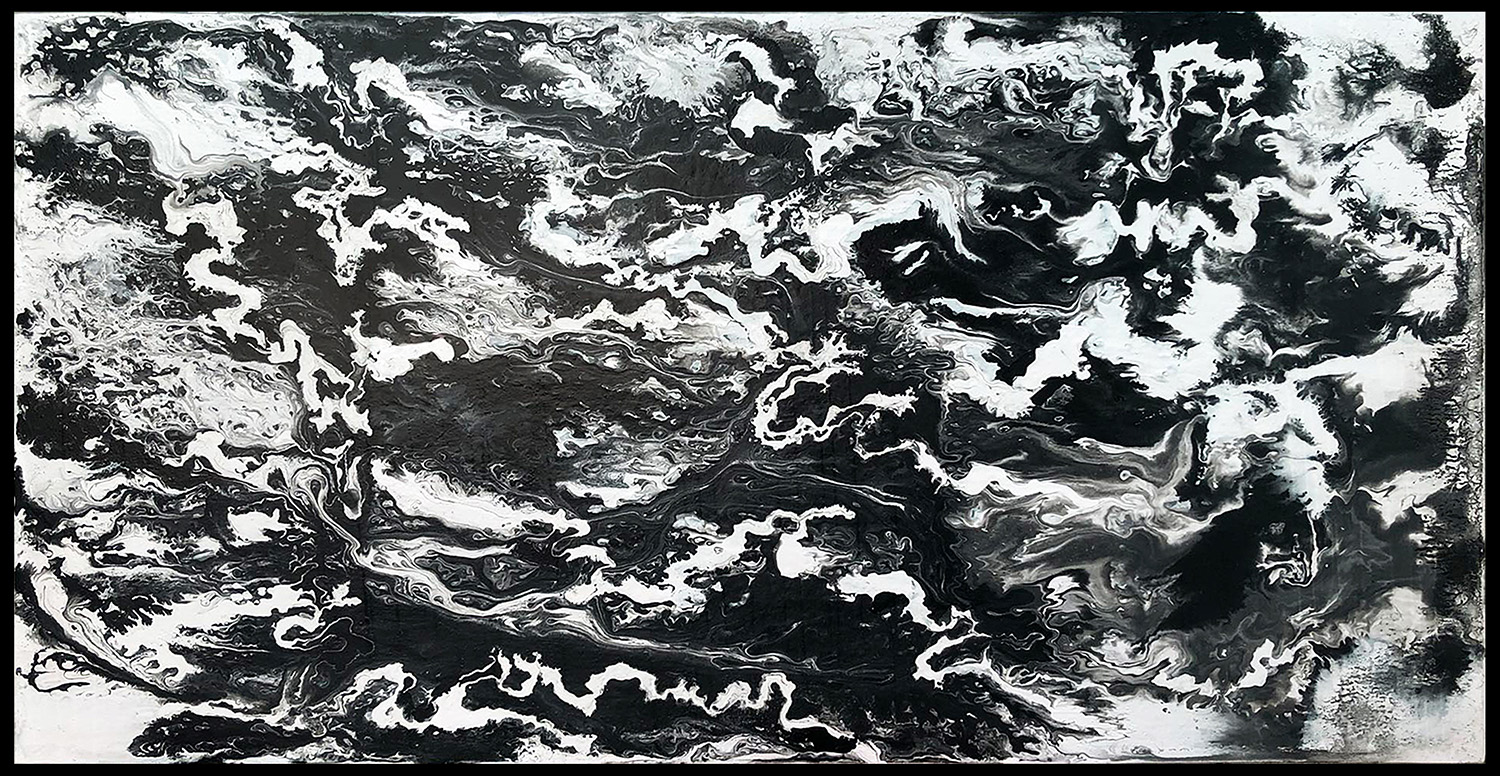
Your works are vibrant, almost rhythmic. If a viewer in Madrid or anywhere else in the world were to stand before one of your paintings and close their eyes, what sound or aroma of the Vietnamese land would you like them to “hear” or “feel” through the energy of your colors?
I would like them to feel the frantic heartbeat of Saigon, the scent of rain on hot earth, and the freshness of our vegetation. I want them to hear the vibrant rhythm of Saigon and feel the true essence of Vietnam through the energy of color in my paintings.
For an artist who works from introspection and abstraction, where does “truth” reside in a work of art?
For me, the truth in a work resides in that sacred space where the emotions I deposit on the paper intertwine with the sensitivity of the viewer. It lies in the honesty of that invisible connection.
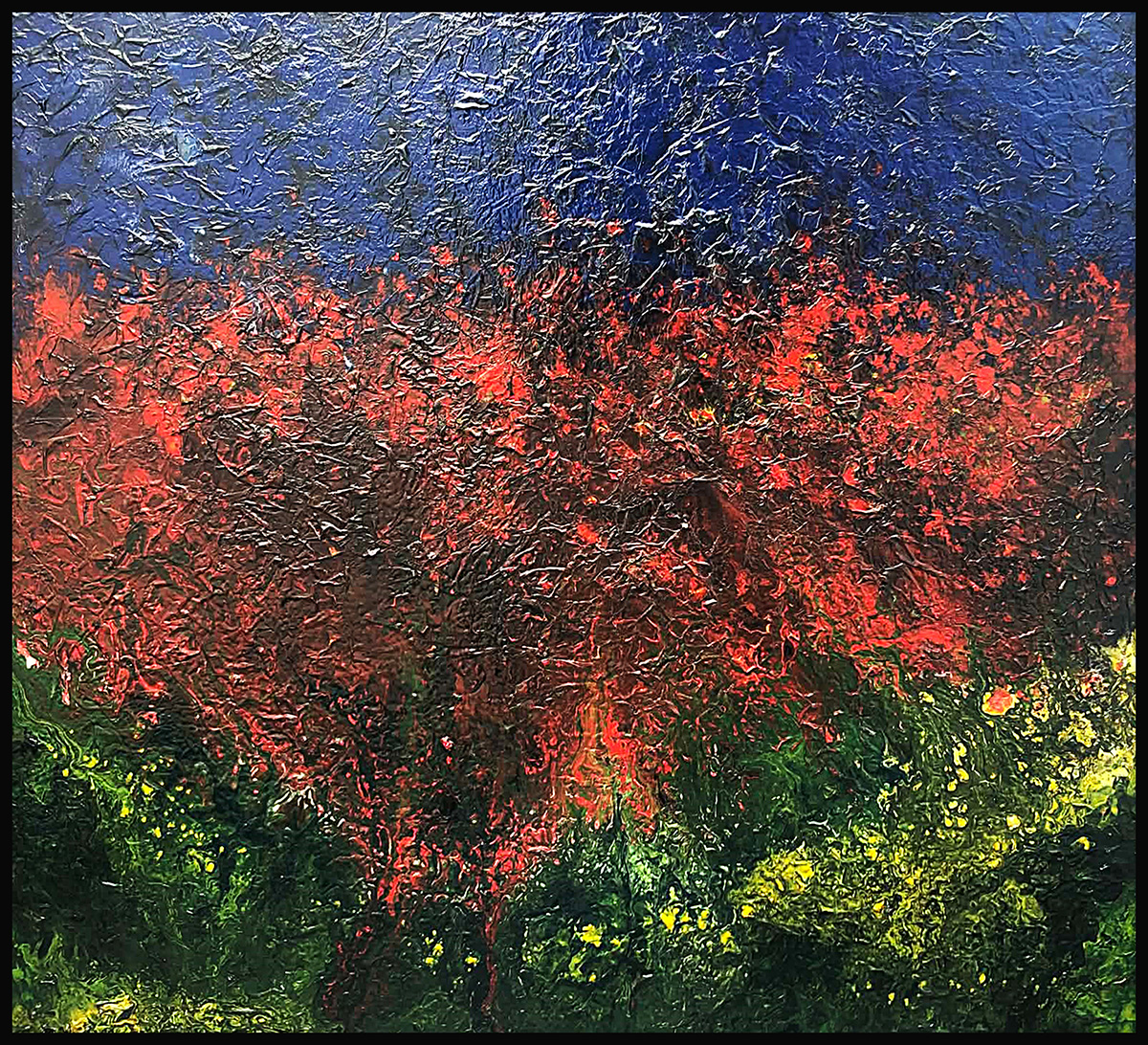
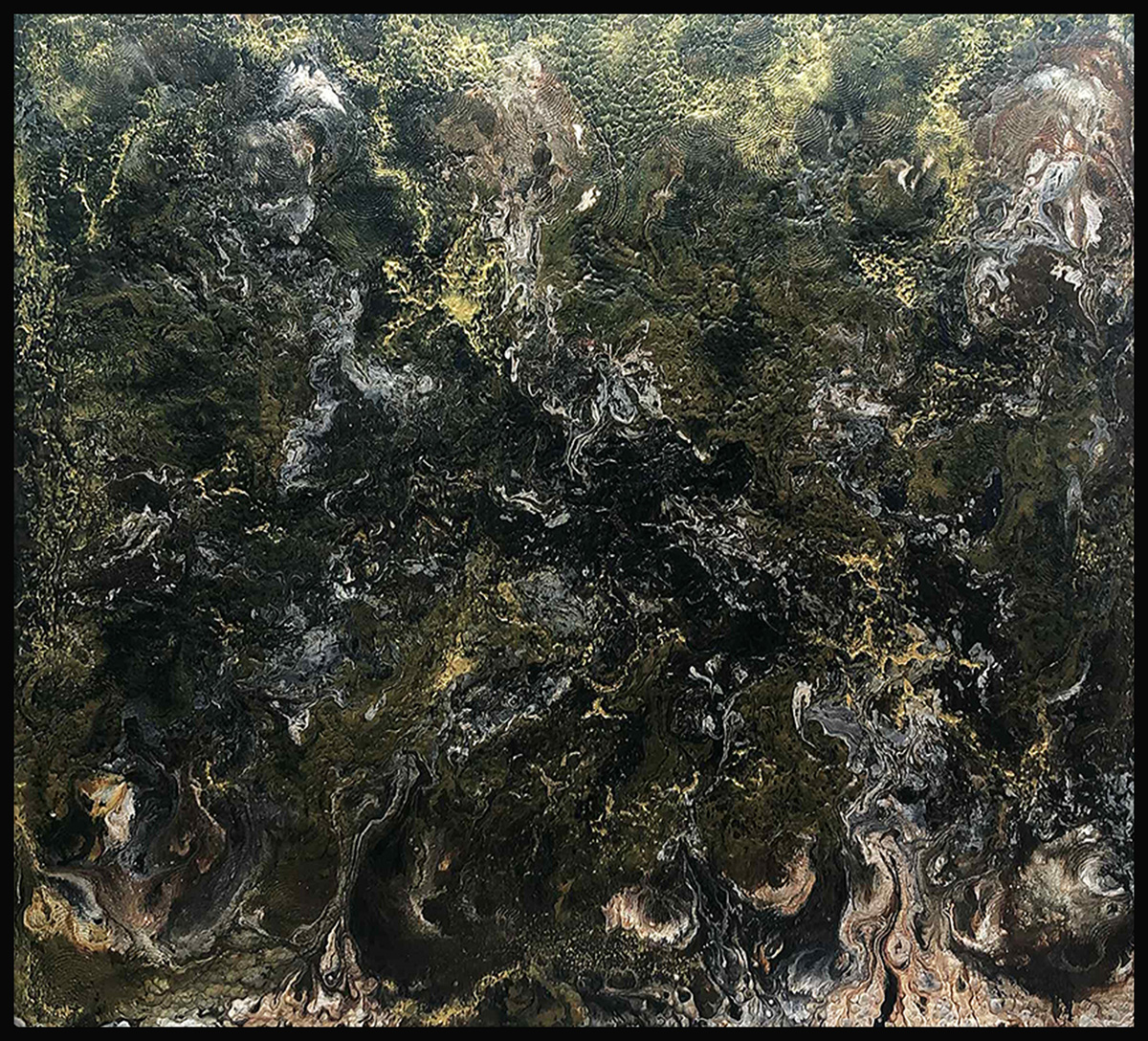
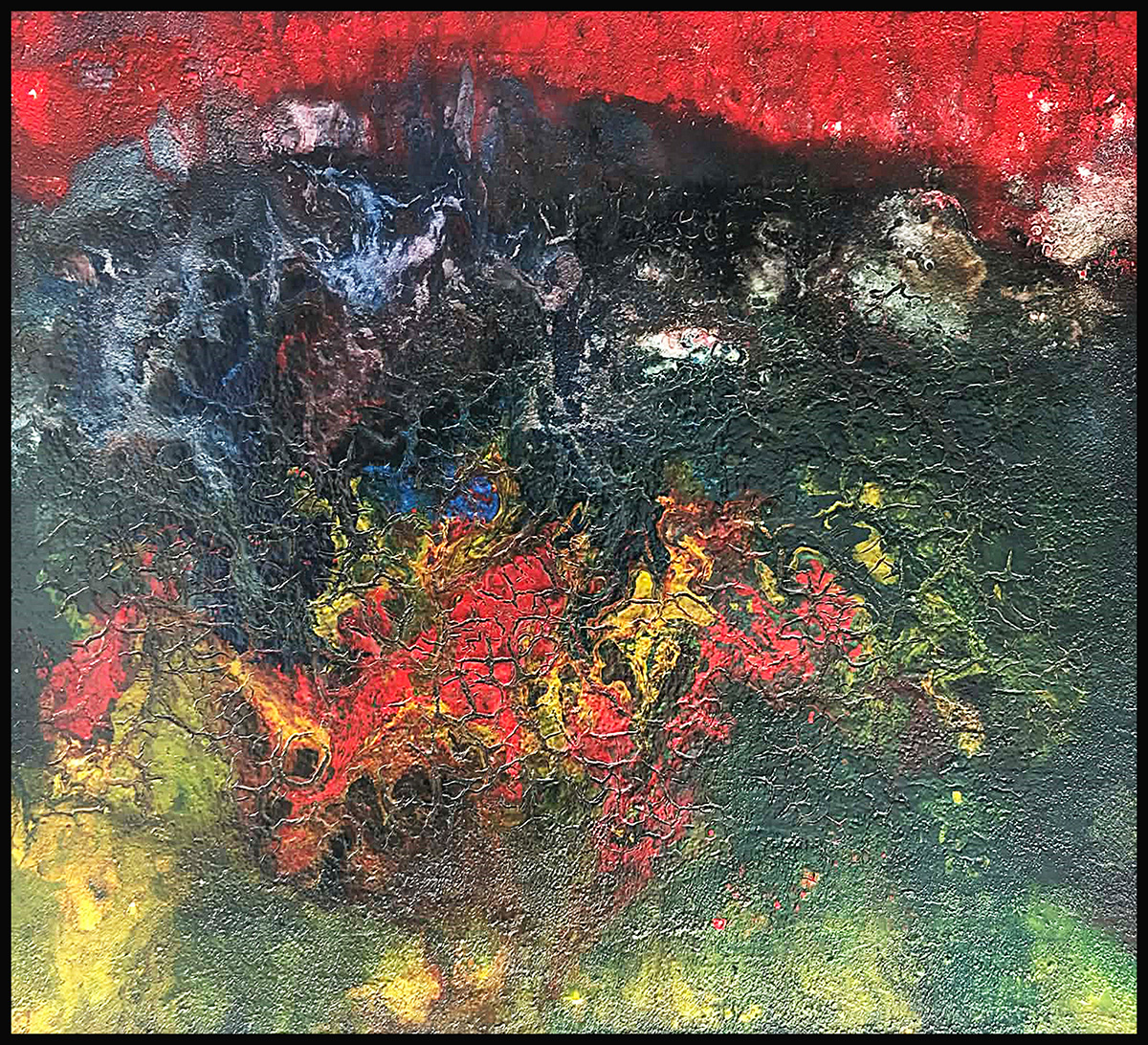
What is your opinion on art competitions as a showcase and an opportunity? Tell us what you would change about the tARTget Prize. This is the easiest question for you and the most useful answer for us.
Art competitions are vital opportunities for my work to be seen globally. I hope tARTget continues to grow as a space for genuine dialogue between artists and the public, where the depth of the message is valued as much as the technique.
We’ve taken note. Perhaps we will see each other in Madrid, or who knows, maybe in Saigon. Thank you, good luck, and above all, lots of inspiration.
Thank you.