MAJA BOROWICZ
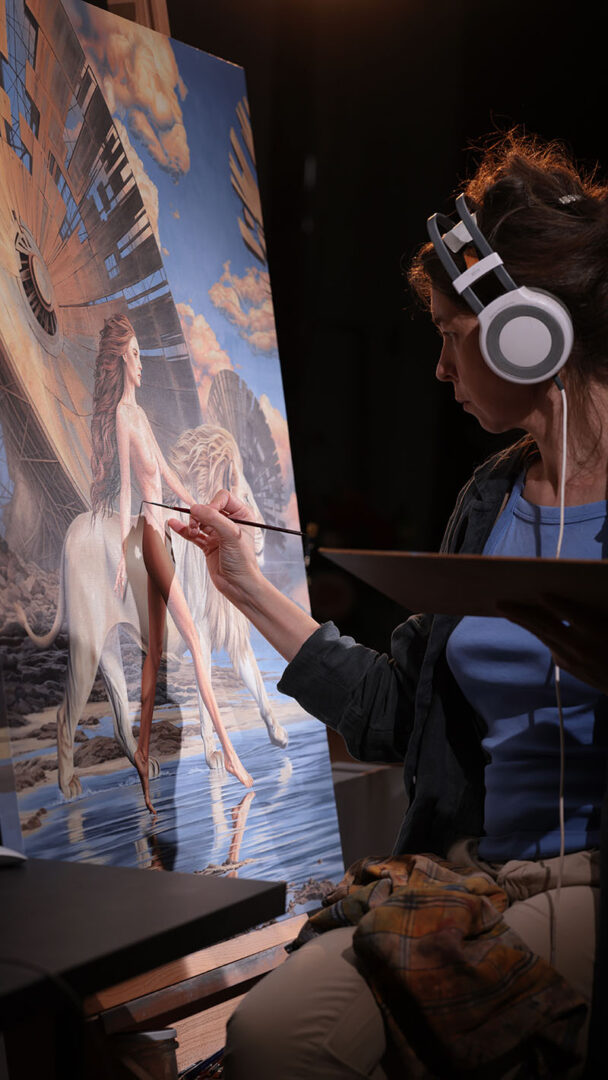
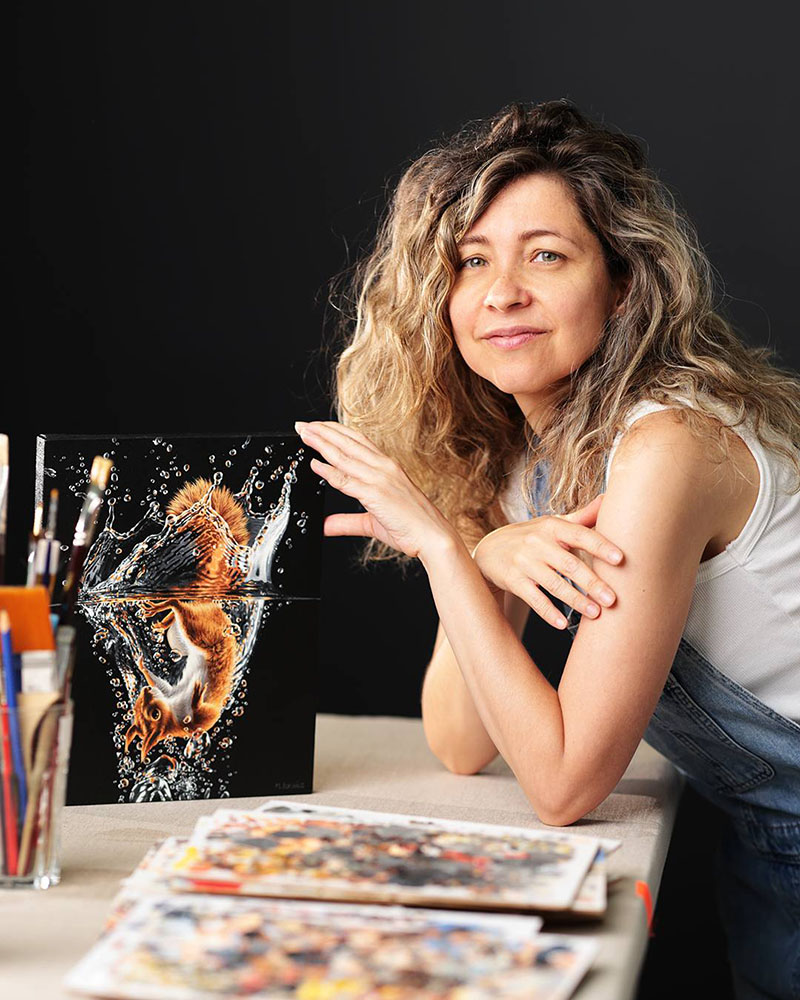
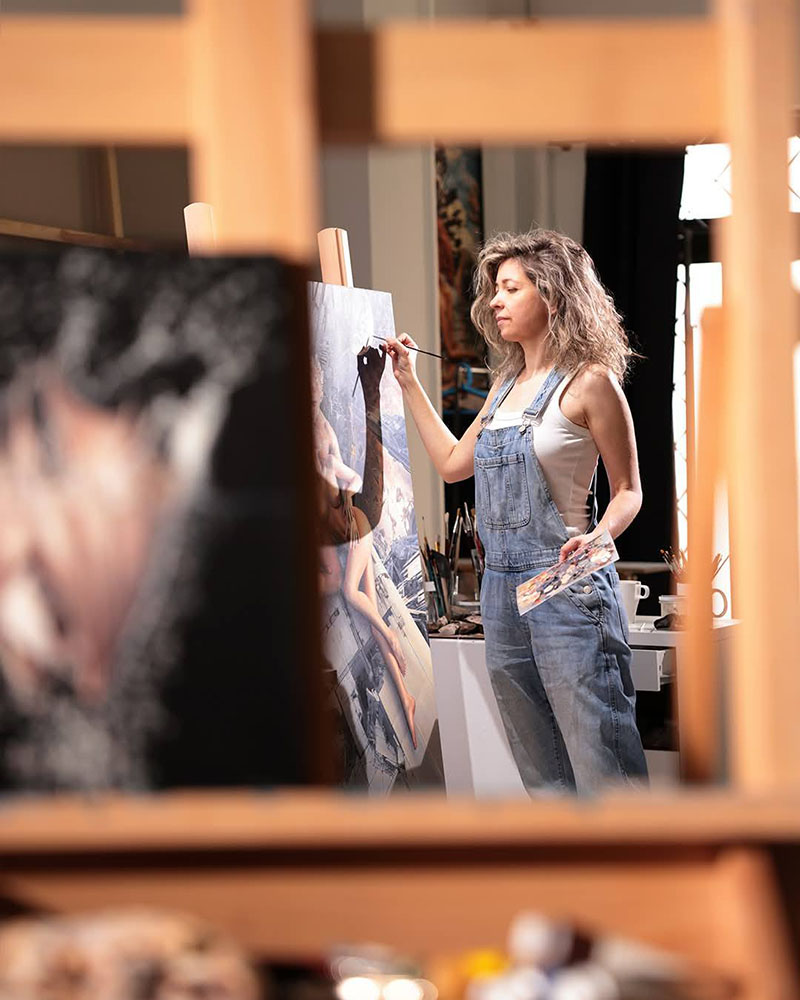
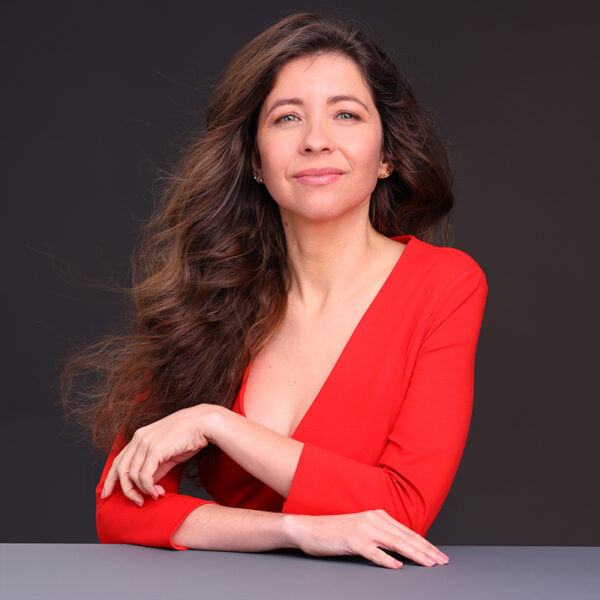
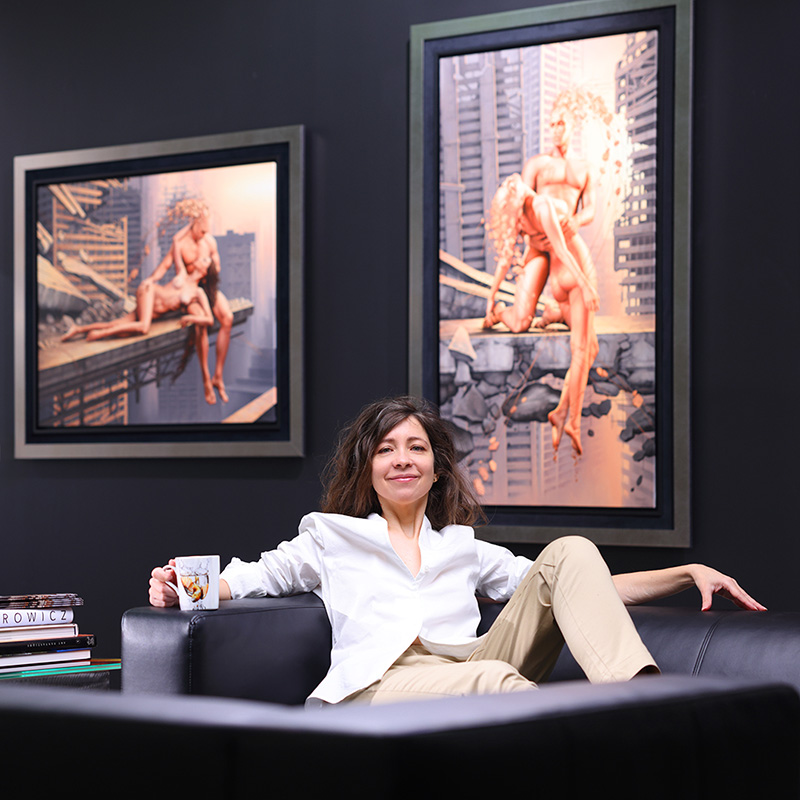
Maja Borowicz (Poland) is a builder of worlds where time and space fold to make way for pure emotion. Her painting—an amalgam of surrealism, magical realism, and emotional realism—is more than an aesthetic whim; it stems from a vital need to process history: both her country’s and her own.
Born in a city devastated by World War II and raised under the secrecy of the Communist regime, Maja has transformed inherited trauma and a chronic illness into a visual language of exquisite technical craftsmanship. In her oil canvases, characters appear fragmented, cracked, or fused with mechanical elements—allegories of the struggle for survival—inviting the viewer on a mystical journey toward the essence of the human condition. Awarded in Taiwan and the United States, Borowicz joins tARTget to remind us that art is, above all, a refuge and a testament to resilience.
Maja, you often mention that you were born in a city brutally punished by war that would never be reborn. A place and a country marked by the scars of bombs, oppression, and secrecy. As an heir to that history, your commitment—but also your necessity—is to capture those dark decades in your paintings. Mentally, how do you establish that bond with the past today to try and move those of us who did not live through it?
I don’t try to tell this story directly. I don’t paint historical events or illustrate the past. Instead, I create images that speak to emotions and to the subconscious.
Throughout my life I have returned again and again to questions about meaning and values. And each time I arrived at the same answer: life itself. It is the only thing any of us truly possesses. Somewhere on a tiny grain of dust called Earth, in the vastness of the cosmos, something extraordinary emerged from inert matter and simple elements — life. That miracle alone is astonishing.
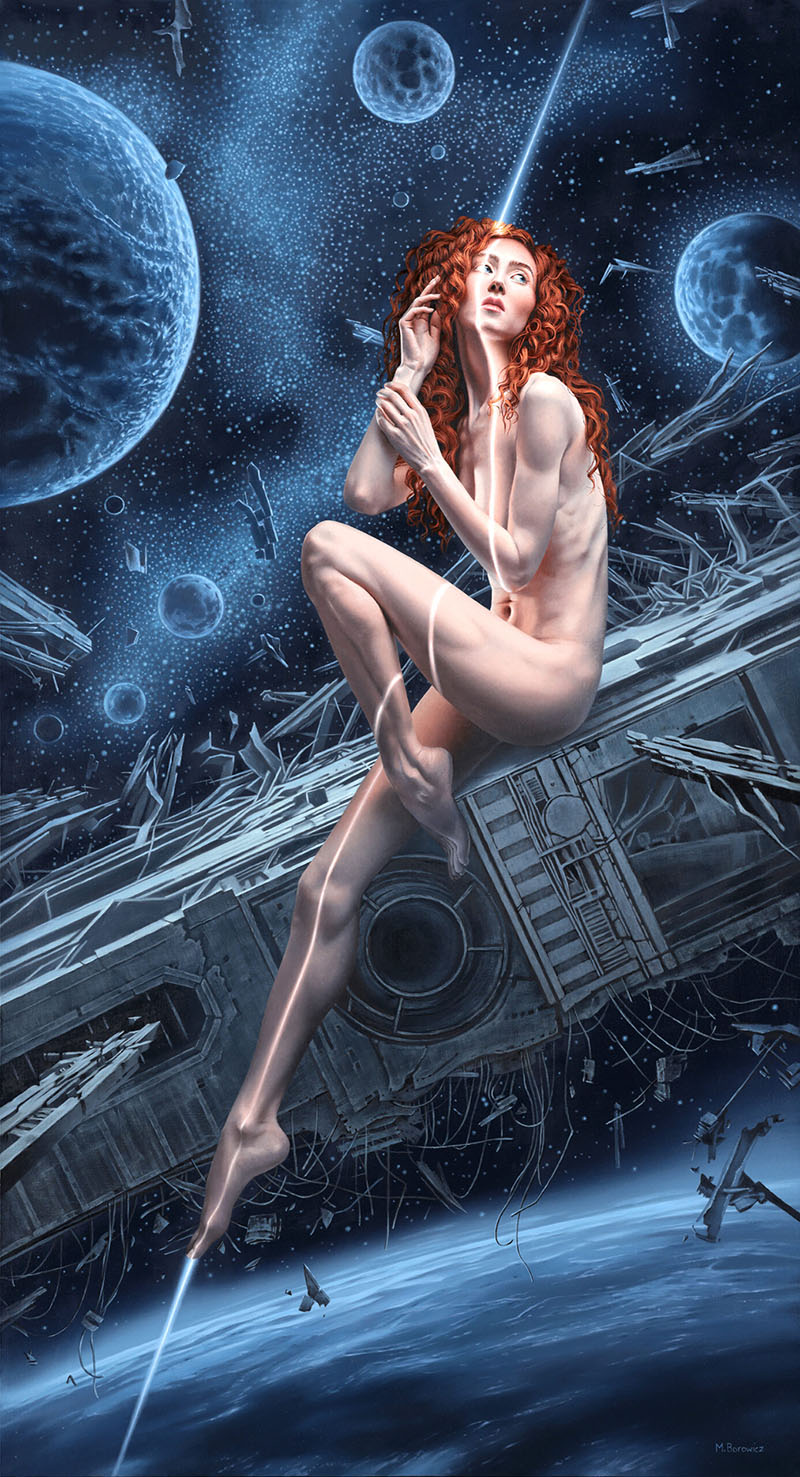
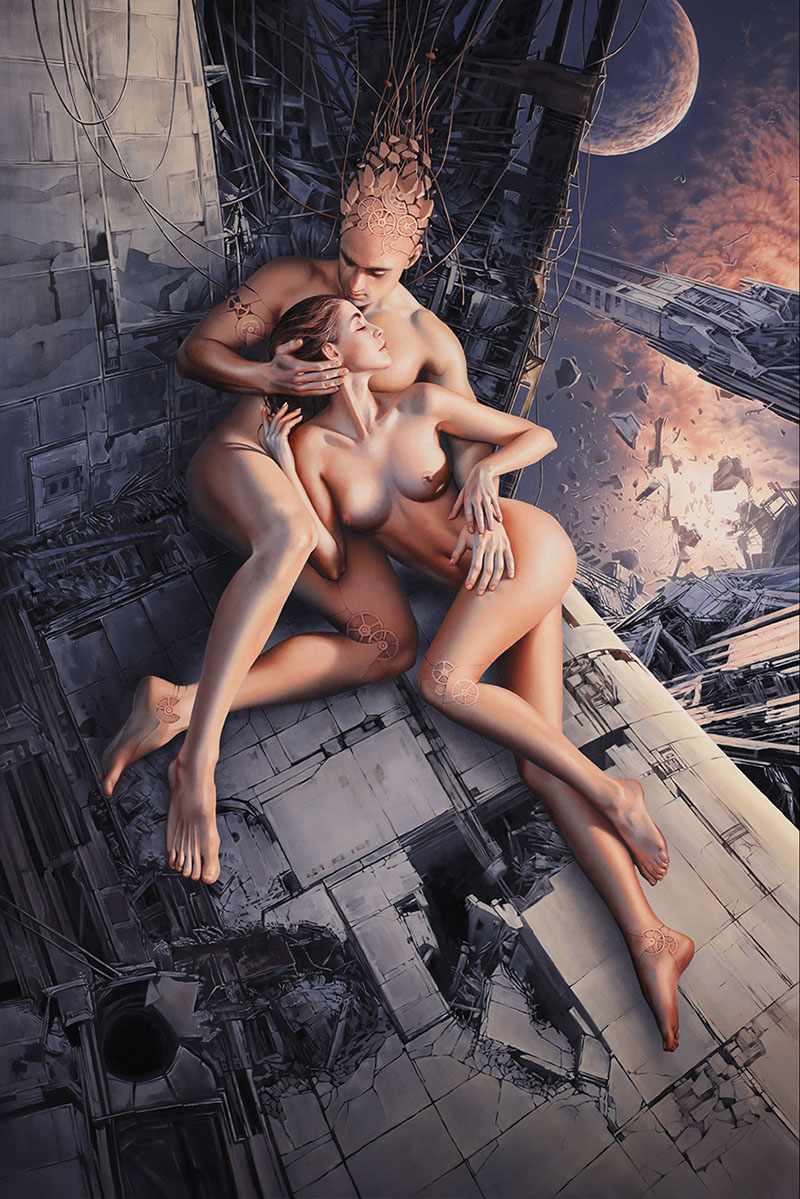
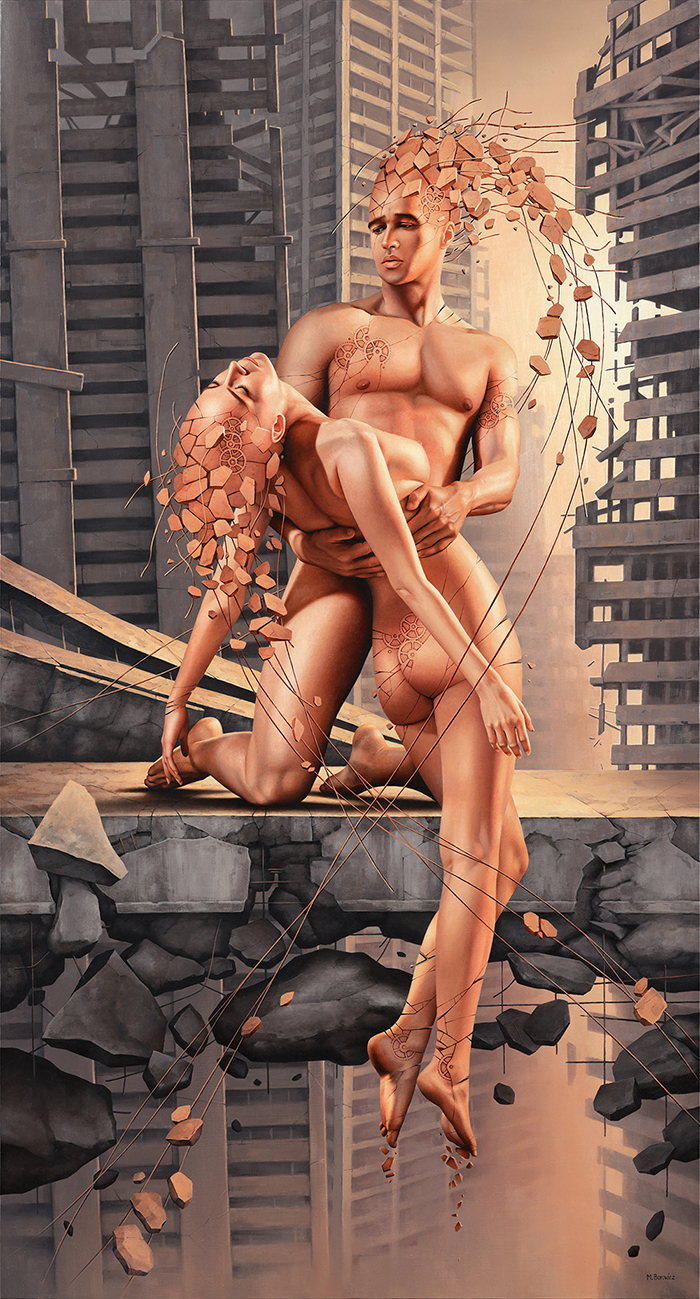
Creating is immeasurably more difficult than destroying. That is why strong contrasts appear in my paintings: beautiful human figures set within a devastated world. I place them there to invite reflection on the miracle of life — and on how easily we allow ourselves to destroy it.
In your works, the characters are often fragmented, cracked, or featuring mechanical parts. Is this “anatomy of rupture” a way of visualizing that generational pain, or is there something deeper in that fusion between the human and the industrial?
Cracks and mechanical elements are, for me, above all symbols. In my artistic search, I needed a visual language capable of expressing sorrow, struggle, and trauma — all those experiences that are part of being human and that leave their marks on our hearts and our bodies.
The fragmentation of the body or the appearance of mechanical parts is therefore not meant to be literal. It is a metaphor for inner processes — the tension between fragility and resilience, between what is deeply human and what is hard, almost industrial. It is a visual way of speaking about how life’s experiences inscribe themselves within us.
Your journey toward the painting that identifies you today was long and tortuous; it took you almost 30 years to shape this highly recognizable hallmark. During that time, you lived through Poland’s transition toward freedom. How did that social and political change of “opening up to the world” influence your own acceptance as an individual and as an artist?
As a child, I was a silent witness to those changes — silent, yet aware of what was happening. I remember how the transformation awakened immense hope, both in me and in the people around me. I remember the strikes and the growing sense that the world we lived in simply could not continue as it was.
On a personal level, I felt something very similar. For as long as I can remember, I felt different — not fitting in, not quite like the other children. A socialist system that did not encourage individuality felt deeply restrictive to me, even frightening.
That is why the change of system became, in a way, a form of liberation. It opened new possibilities — emotional and social, but also very concrete ones. Only when the healthcare system began to
open itself to knowledge and medical advances from beyond the Iron Curtain were my illnesses finally diagnosed.
Of course, the world does not change in a single day, and that path remained difficult for a long time. Yet when I look back at these three decades, I feel that my life — the older I become — grows more meaningful and more conscious.
The same is true of my artistic path, which is still unfolding. Today, an independent artist can find support through private initiatives and collectors. And although traces of the old system still remain, I believe that even someone who is “different,” who does not fit into established patterns, can find their place.
Despite having taught digital painting workshops and lectures on special effects in cinema, you choose traditional oil painting to encapsulate your most complex messages. That very peculiar mysticism exhibited in your work—can it only be provided by traditional pictorial craftsmanship?
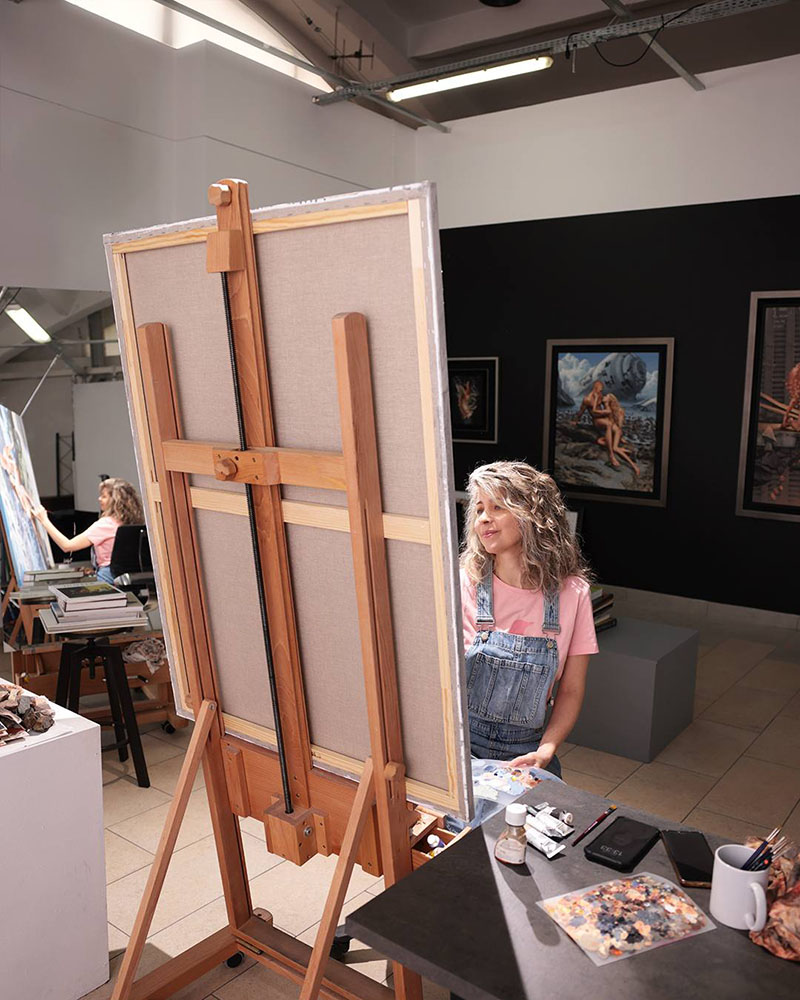
I believe art can be created in many different ways, and each of them can hold value. Yet there is something unique about traditional techniques — their singularity. When you paint a canvas or sculpt a form, you are creating something one of a kind, an object that physically exists in only a single instance.
A digital work, even when it is perfect, can be reproduced endlessly, and in a certain sense it loses that uniqueness. In a traditional painting, by contrast, the trace of the artist’s hand remains — the presence of the process, of time itself.
I think it is precisely this material presence and irreproducibility that allow viewers to form a more intimate relationship with a work of art. For many people searching for something authentic and profound in art, that sense of singularity holds a special value.
You mention that, faced with a reality that failed you and fragile health during childhood, your imagination became your bunker—the place where everything was possible. Now that your works travel all over the world, do you feel that this imagination has ceased to be a private refuge?
Not exactly. My imagination is still a very private refuge, because no one but me can see everything that exists within it.
Painting only allows me to share a small fragment of that inner world with others. It is still just a glimpse.
I also feel that if I do not paint the images that exist in my mind, no one else will — and no one will ever see them. That awareness brings a certain sadness.
But it is not really about the whole world seeing them. What matters more is the possibility of sharing them with those rare, sensitive people who are able to read their meaning. In that sense, my painting is simply a small window through which my inner world can reach others.
There is a fascinating paradox in your work: you represent chaos, rupture, and heartbreak, yet you do so with a hypnotic plastic beauty. Is it a matter of dignifying trauma through aesthetics?
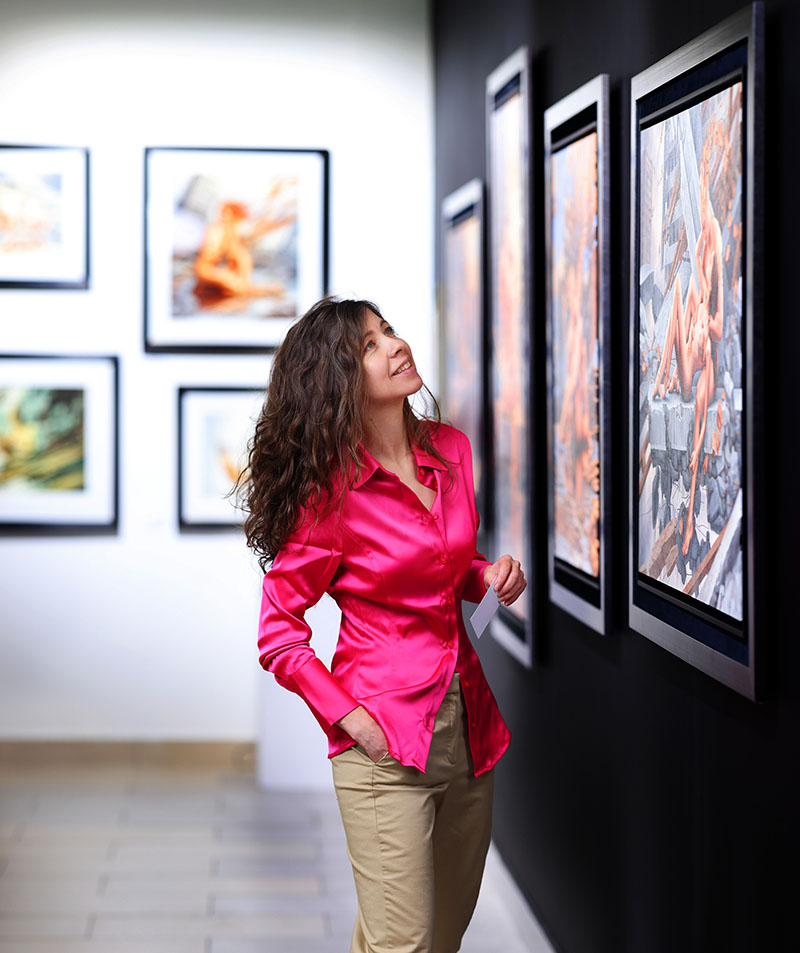
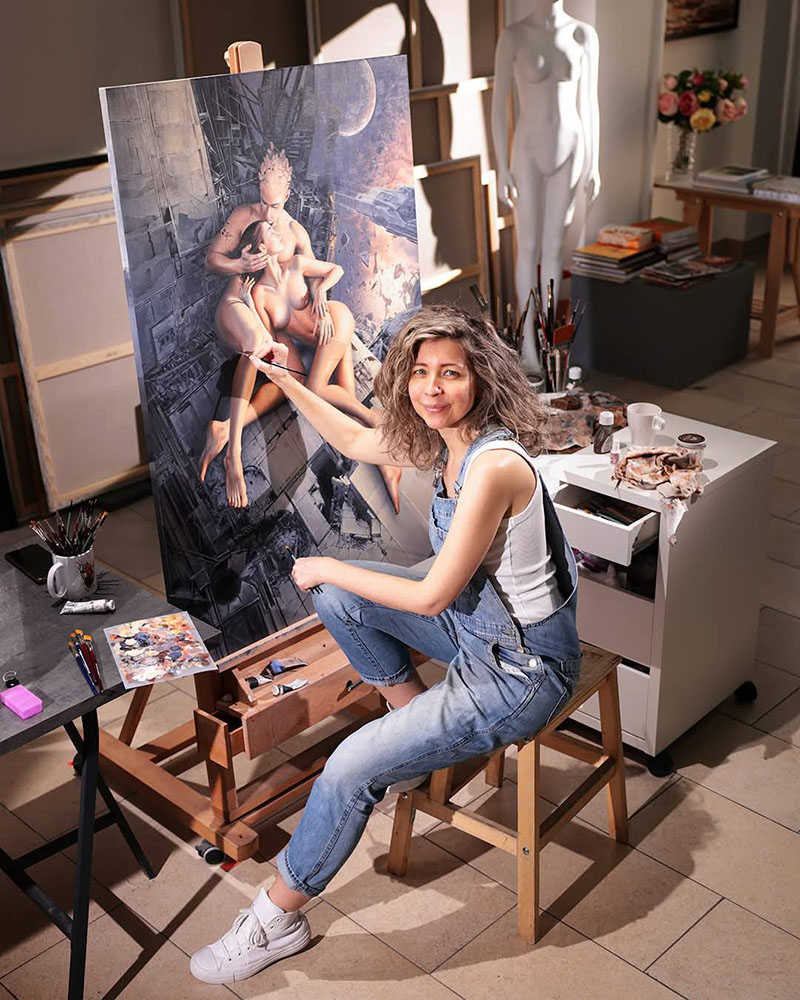
The content of my paintings is a metaphor for the reality that surrounds us. I often place human figures within post-apocalyptic landscapes. Everything there is both symbolic and real at the same time.
Destroyed cities and buildings can reflect the inner worlds of the characters — the ruins of their experiences, struggles, and challenges, which in one way or another belong to all of us. But they may also refer quite literally to the reality around us, a world that is constantly changing.
Even though the figures possess physical beauty, they carry visible traces of pain: wounds, cracks, marks of past experiences. I wanted to move away from the stereotype that difficult subjects must be expressed only through ugliness or darkness.
For a less attentive viewer, my paintings may simply appear as an attractive vision of apocalypse. But someone who lingers a little longer may begin to perceive a deeper layer — emotions, experiences, and the marks that life leaves within us.
“Emotional realism” is a term that perfectly defines your work. You have exhibited in places as diverse as Taipei, Miami, Moscow, or Brussels. Perhaps pain and hope are the only universal languages we have left to move a viewer in Warsaw and Taiwan alike?
I believe the only truly universal language is emotion. Whether someone lives in Warsaw or Taipei, we all understand pain, hope, longing, or love.
Emotions are also the only force that can truly move a person and inspire them to act. That is why, in my art, I try to reach that shared human core — the feelings that each of us carries within.
If my paintings are able to touch viewers anywhere in the world, it is because they speak about experiences that are universal: the fragility of life, the presence of pain, but also the hope and inner strength that allow us to rise again.
At tARTget Prize, we value “excellence and truth.” Your artist statement is startlingly honest when speaking about illness and frustration. Is painting a healing tool for you, or are you satisfied with it serving to make life more bearable?
I’m glad to hear that we share similar values. It sometimes feels as though many of them are fading in the contemporary world — especially those that demand effort, perseverance, and long, patient work.
From my perspective, painting is not a tool for healing. It is more like a way of living. For me, it is what makes life possible.
Before I began to paint, I felt like grass bending in the wind — constantly changing jobs, projects, places to live, and the people around me. There was a great deal of chaos in my life, and it was difficult to build anything lasting.
Painting brought me a sense of stability and quiet, but it also opened the door to meeting remarkable people, sharing thoughts, and discovering new horizons. When I began to paint, I felt as if I had finally found the road that leads home.
Maja, a message for so many artists who today face their own limitations or doubts in the studio.
My message is not really meant only for artists, but for anyone. There are moments in life when everything seems impossibly difficult — nothing works, we struggle, and it feels as if we are standing before a wall we cannot break through.
In times like these, it is important to give ourselves time. To pause, to sit quietly, and to truly reflect on what we want from life. Is this the path we should continue to follow, or perhaps it is time to try another direction?
I have always felt a certain fear of change, but experience has taught me one important thing: sometimes it is better to change course than to keep forcing our way forward.
Very often, it is precisely on that different path that we discover what we were truly searching for.